







E-Invoicing in the United Arab Emirates
Effortlessly Transition to E-Invoicing with Webtel’s Global Solution
As the UAE prepares to implement mandatory e-invoicing, it is essential to plan and prepare your business for this transition. VirtueDataSoft offers a seamless e-invoicing solution integrated with leading ERP systems like SAP ECC6, S/4HANA, Oracle ERP, and Microsoft Dynamics 365 to ensure you stay ahead of the curve and comply with the upcoming VAT e-invoicing regulations.





Service
Experience Seamless Compliance with Advanced Features
Effortless EBS Integration
Connect seamlessly with any ERP, including SAP, Oracle, Tally, Microsoft Dynamics, or custom-built systems, ensuring .
Bulk Invoce Processing
Effortlessly manage high transaction volumes for B2B and B2C transactions with our optimized bulk invoicing feature.
Real-Time Auto-Validation
Validate invoices instantly against FTA regulations, ensuring compliance with every transaction from end-to-end.
Customizable Templates
Tailor invoices to match your brand identity with user-friendly customization options.
Secure Encryption
Protect your data with advanced encryption technologies, ensuring the safety and integrity of every invoice.
Stay Ahead of UAE’s E-Invoicing Regulations
Trusted by Global Brands






Enterprise-Grade Compliance
IP
whitelisting
Secured
HTTPS
Dry and Enriched APIs
TLS 1.2
supported
Two Factor Authentication
ISO
27001:2013
ISO
9001: 2015
Client ID &
Secret Code
256-bit
SSL encryption
VAPT
Certified
What businesses need to know

Mandatory for VAT-Registered Businesses

Digital
Invoice Storage

Real-Time
Validation
Got Questions? We’ve Got Answers!
1. When is e-invoicing mandatory in the UAE?
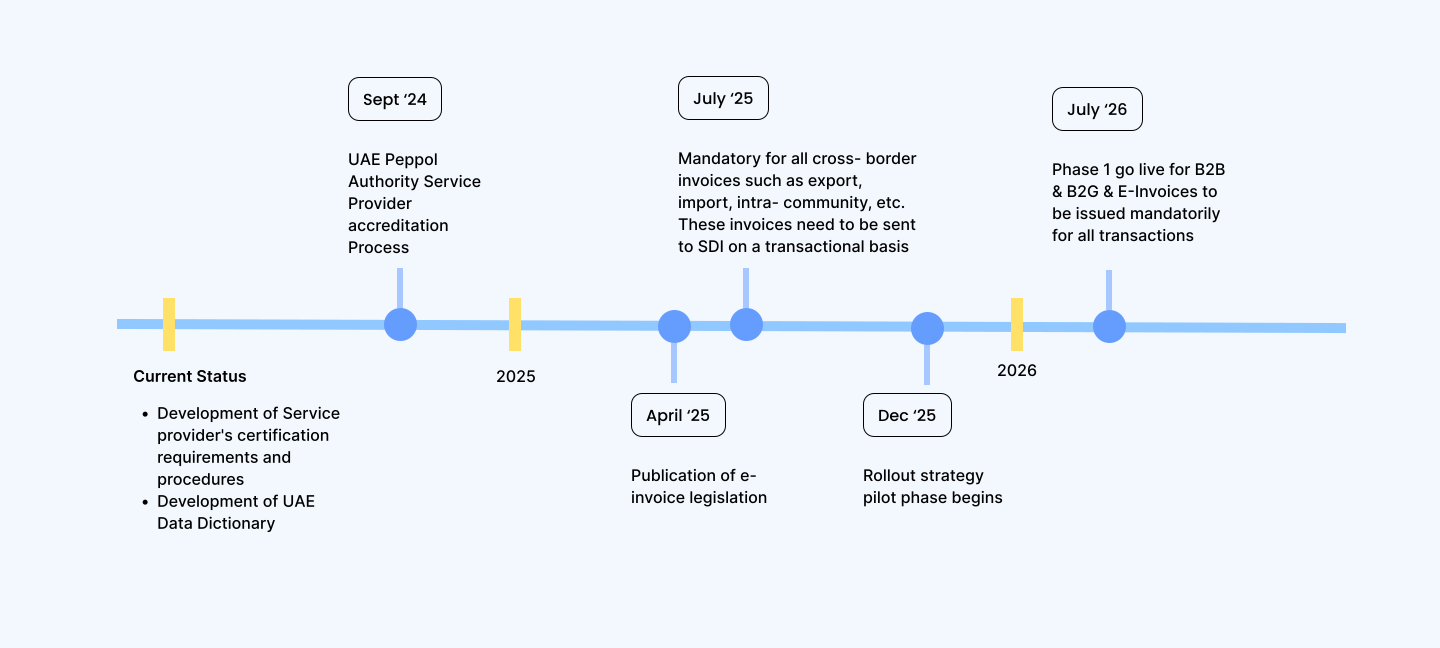
By 2026
2. Who needs to comply?
All VAT-registered businesses
3. What must an e-invoice include?
Key details such as TIN number, invoice number, and VAT amounts
4. Is Webtel’s solution compliant with UAE regulations?
Yes
5. What is e-Invoicing and how is it being implemented in the UAE?
e-Invoicing in the UAE refers to the digital exchange of invoice data in a structured electronic format. The Federal Tax Authority (FTA) is implementing a nationwide e-Invoicing system that requires businesses to send invoice data to a centralized platform (referred to as the “5th corner”) for validation and regulatory reporting, following the UAE PINT (Peppol Invoice Node for Tax) standard.
6. What is the Peppol Network and how does it relate to e-Invoicing in the UAE?
The Peppol Network is an international standard for electronic document exchange, including e-Invoices. In the UAE, the FTA has adopted the Peppol framework to enable seamless and standardized B2B and B2G e-Invoice exchange. Businesses must ensure their systems can send and receive invoices over the Peppol network using UAE PINT-compliant formats.
7. What is UAE PINT and why is it important?
UAE PINT (Peppol Invoice Node for Tax) is the localized version of the Peppol BIS Billing 3.0 standard, tailored to meet the UAE’s regulatory and tax compliance requirements. It ensures all invoices transmitted over the Peppol network include necessary tax details and structure mandated by the FTA.
8. Do I need to work with a certified Peppol Access Point provider?
Yes, to participate in the UAE’s e-Invoicing system via the Peppol network, businesses must either become an Access Point or connect through a certified Peppol Access Point provider. These providers ensure secure transmission, compliance with UAE PINT, and seamless integration with the FTA’s infrastructure for e-Invoice reporting.